repeatability
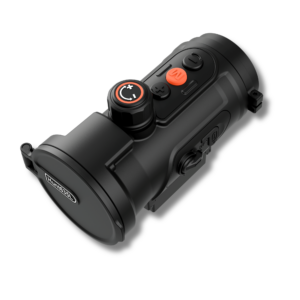
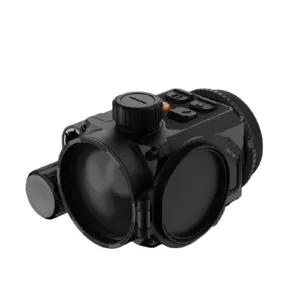
Pay close attention to the repeatability of your thermal imaging device. For this is a clamp adapter necessary, which also assembles under adverse conditions in the hunting ground, must be absolutely repeatable. We recommend the two-part bayonet lock solution for thermal imaging attachments VENARI duo connector!
Thermal imaging attachments in the shop (sorted by price in ascending order)
Thermal imaging attachments 2026 in the test & purchase advice
Last updated: 24.08.2026
Current thermal imaging attachments turn night into day. In just a few simple steps, your daylight optics become night-vision-capable. We have compiled all current devices in this overview and below we present the properties of individual devices. When it comes to attachments, the focus is on repeatability and the simplest possible operation. But the image performance and operation are also important for successful use in the hunting ground.
Our current recommendations
Recommendation for:
Particularly simple operation
- Extremely cheap
- Nevertheless, a 640 sensor
- Especially light and easy to handle
Recommendation for:
Mixed areas with greater distances
- New model with LRF
- High resolution sensor
- Robust housing
Contents
Thermal imaging attachment - what to look for when buying?
Territory & Range
The hunter's hunting area plays a key role in determining the appropriate thermal imaging clip-on device. Generally speaking, the greater the hunting distances, the larger the budget should be – more powerful devices have more expensive components. If the hunting area consists primarily of forest and feeding stations , a less expensive device will suffice. However, if there is a larger proportion of open fields, or if typical hunting distances are significantly over 100 meters , a higher-quality device is worthwhile. The price range for these devices currently extends from approximately €1.000 to €5.500 for the latest high-performance models with HD sensors. Typically, around €2.000 including an adapter should be budgeted, which is sufficient for most hunting areas.
repeatability of the attachment
The term " repeatability" refers to two aspects of a thermal imaging clip-on device. Firstly, it's tested whether the device can produce shot groups at 100 meters with a dispersion radius of approximately 5 cm – regardless of whether it actually hits the hunter's intended target. Secondly, the repeatability of the zeroed device is crucial: Here, the connection between the clip-on device and the daytime optics is paramount. Only a good adapter ensures that the device shoots with repeatable accuracy not only at the shooting range but also when quickly mounted in a hunting blind. Therefore, we distinguish between these two aspects:
adapter sockets
Previously, one-piece clamp adapters (Rusan, Smartclip) were frequently used for mounting the attachment. They have proven effective and ensure a secure fit.
When removing and reattaching the clamp, the contact point can shift – especially in confined spaces and in the dark . A standard clamp adapter can easily become misaligned or tightened crookedly in these situations.
We therefore recommend a two-part adapter – the Duo Connector . The clamping sleeve remains firmly on the lens, while the bayonet ring sits on the attachment device. When attached, the device simply clicks into place in a precisely repeatable position – without the hunter having to worry about screen position or axis alignment.
Our adapter recommendation: DUO connectors from VENARI or Präzise Jagen
Battery Life
Changing batteries in the dark while sitting in the pulpit is disruptive – the Battery Life This is therefore an important aspect when choosing a device. Most devices use (CR123A) (short) or Type 18650 (Long) batteries. In some models, such as the InfiRay For the CL42 and CH50w, an extended battery housing can also be ordered, which allows the use of long 18650 batteries.
Enlargement of the daylight optics
The magnification of the daylight optics should not start too high when using a clip-on device. With a high initial magnification, the screen area is enlarged to such an extent that only a portion of the image is visible. Lenses whose lowest magnification shows the entire screen of the clip-on device are ideal. The maximum magnification, on the other hand, is not a crucial factor – more than 6x is rarely necessary, as the image becomes very grainy beyond that point anyway.
We recommend an initial magnification of 2x to 2,5x or less to ensure the entire screen of the attachment remains visible. This value may vary slightly depending on the device.
Service
Operation is primarily a matter of personal preference. All devices have a mechanism to adjust the point of impact and zero the rifle.
Latest devices such as the InfiRay Mate They also come with a remote control that can be attached to the stock. This eliminates the need to reach over the device to operate the attachment.
new releases
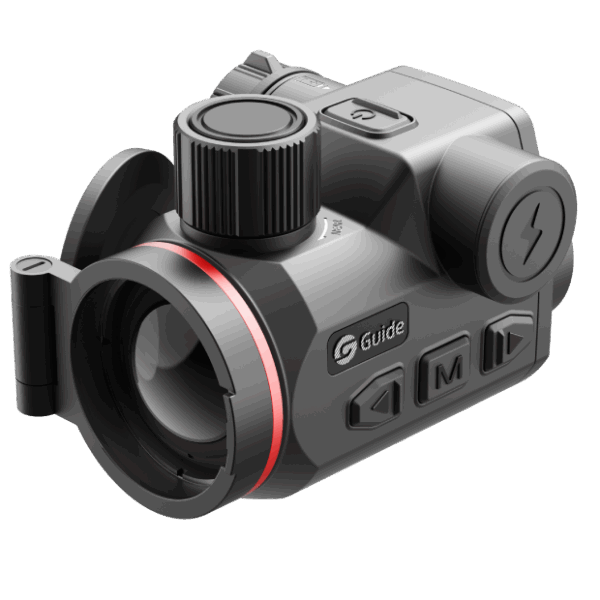
The Guide Orion O635CS from the new Orion series is currently causing a stir . The device offers a 640 sensor at an unusually low price and follows a deliberately minimalist design: multimedia functions such as Wi-Fi and even video recording have been completely omitted. What remains is pure image quality without unnecessary features – an approach that is well-received by hunters and has already made the Orion O635CS one of our best-selling devices.
Rangefinders (LRF) are on the rise
Devices with integrated laser rangefinders are becoming noticeably more common. Where LRF modules were the exception just a few years ago, they are now standard equipment on many new models.
LRF integrated
LRF integrated
LRF integrated
LRF integrated
Comeback of strong brands
JSA Night-Lux has a significantly stronger market presence again and has noticeably expanded its product range. Guide is also making its presence felt: With the TB 2.0 series and the aforementioned Orion series, the manufacturer now covers a broad price and performance spectrum.
The HIKmicro Thunder 3.0 series It has been established on the market for quite some time now. We don't expect a new series of devices from HIKmicro until 2027.
Trends at a glance
HD sensors: The next level of resolution
At the high end of the market, the first devices with HD sensors are now appearing – resolutions of 1280×1024 pixels instead of the previously standard 640×512. This is a significant leap, delivering more image detail, especially at long distances. The price is high: these devices cost considerably more than classic 640 models and are aimed at hunters who want to target game at extreme distances and are willing to pay a premium for it.
Upper class
Upper class
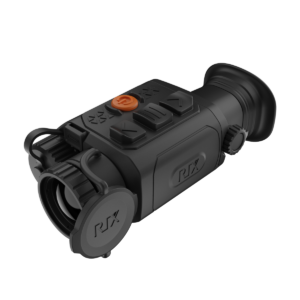
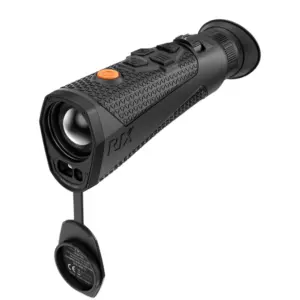
Both devices share many technical features: same sensor, same lens, and LRF (Light Range Receiver) onboard. For most hunters, a classic 640mm device is still perfectly adequate – but those who specialize in very large hunting areas and are looking for absolute top performance will currently find the best on the market here. You can find all NocPix models in our manufacturer overview.
Thermal imaging aiming technology – that is, riflescopes with integrated thermal imaging – remains prohibited for hunting in Germany. Only clip-on devices mounted in front of existing daytime optics are permitted.
Our current recommendations
Recommendation for:
Particularly simple operation
- Extremely cheap
- Nevertheless, a 640 sensor
- Especially light and easy to handle
Recommendation for:
Mixed areas with greater distances
- New model with LRF
- High resolution sensor
- Robust housing
Purchase advice: Introduced thermal imaging attachments
-
Guide Orion O635CS
- Ab 1.259,00 €
-
Delivery time: approx. 1-2 working days (within Germany)
Guide Orion O635CS
Especially easy to handle | simple operation
The Guide Orion O635CS only brings 285 grams On the scales – unusually light for a 640mm attachment. 640×512 sensor with 12 µm pixel pitch works together with the high-performance light source 35 mm F0.9 lens and delivers sharp contours down to the smallest detail. The thermal sensitivity of below 15 mK ensures that Wild It stands out clearly from the background, even in fog or rain.
In a hunting blind, every second counts: The device is ready to use after just three seconds , with an image delay of only 26 milliseconds . The housing withstands recoil of up to 6000 joules and is IP67- rated for dust and moisture protection. Two included batteries provide up to 7 hours of runtime per charge – enough for a whole night in the hunting blind.
The Orion housing has an M33.5 thread , not the standard M52. For mounting it to your riflescope, you will need the appropriate Duo connector or Rusan adapter – select it to match the objective lens diameter of your optic when purchasing.
-
- Sale!!
Pard FT32
- Ab 1.089,00 €
-
Delivery time: approx. 1-2 working days (within Germany)
-
- Sale!!
Pard FT32 LRF
- Ab 1.289,00 €
-
Delivery time: approx. 1-2 working days (within Germany)
PARD FT32 / FT32 LRF
The PARD FT32 brings a 384×288 sensor with 12 µm pixel pitch , and a 35mm lens with. The sensitivity of ≤25mK It ensures a steady, high-contrast image, even in fog or damp conditions. With approximately 370 grams The device rests pleasantly lightly against the glass. The replaceable battery is in the following format: 18650 makes you independent of expensive special batteries and lasts up to 5h .
For those who need to know the exact distance to their game, the LRF version is the way to go . The integrated laser rangefinder displays the target distance in seconds – especially in unfamiliar terrain, this significantly reduces uncertainty when identifying game. However, the device with LRF weighs around 410 grams , slightly more than the basic version. For hunters who only require thermal imaging, the lighter version without LRF remains the more economical choice.
If thermal imaging alone is sufficient for your needs, the basic version without LRF will save you a few euros and grams. However, if you also need precise distance information, the LRF version is particularly worthwhile in difficult terrain.
-
- Sale!!
NocPix Mate H50R
- Ab 2.564,00 €
-
Delivery time: approx. 1-2 working days (within Germany)
NocPix Mate H50R
The Mate H50R brings a 640×512 sensor with a NETD value of ≤ 15mK with values that are otherwise only offered by significantly more expensive devices. 50mm lens with F1.0 Even in rain and fog, it still gathers enough heat signature to reliably detect a target. The built-in Laser range finder up to 1200 m The distance is displayed directly in the image.
With Magic Zoom, the device automatically sharpens the image as you zoom in – no pixelation when viewing from a distance. For this price range, this is top-of-the-line equipment . A real advantage over similarly priced models without LRF (Light Range Reduction).
When zooming in, the image automatically shrinks and is sharpened. The result: Even at greater distances, the image remains clear instead of breaking down into pixels.
-
JSA NightLux HOGHUNTER Mini 635
- Ab 1.489,00 €
-
JSA Night-Lux HOGHUNTER Mini 635 LRF
- Ab 1.689,00 €
JSA Nightlux HOGHUNTER Mini 635
The HOGHUNTER Mini 635 works with a 640×512 VOx sensor and a NETD value of ≤15 mK – Even the finest heat signatures remain clearly visible in humid air and low light. 35mm lens with F1.0 provides for this a Field of vision of 21 × 17,5 meters at 100 metersThe shutterless system calibrates almost silently in the background and does not interrupt your observation.
We offer the device in two versions – the basic version above, and the version with an integrated laser rangefinder (LRF) below. The LRF measures distances up to 1.000 meters directly from the device and displays the value on the screen, which is practical for anyone who needs to know the exact distance to their target. Without the LRF, the device weighs approximately 380 grams ; with the LRF, it weighs just under ten grams more. The sensor, optics, and battery system are the same for both versions.
Both versions share the same sensor, optics, and housing. Only those who want to read the distance to the target directly on the device need the LRF variant – the basic version is perfectly adequate for simple thermal imaging observation.
-
- Sale!!
HIKmicro Thunder TQ35c 3.0
- Ab 1.919,04 €
-
- Sale!!
HIKmicro Thunder TQ35cl 3.0
- Ab 2.207,04 €
HIKmicro Thunder TQ35C / TQ35CL 3.0
Upper class
The Thunder TQ35C / TQ35CL 3.0 brings a 640×512 sensor with 12 µm pixel pitch and a thermal sensitivity of below 15 mK NETD with. The 35mm lens with F1.0 opens up a wide field of view of 21,9 m at 100 m – a generous overview for a device of this focal length. HSIS shutterless system It keeps the image running continuously without freezing during calibration. The magnesium housing is made of... IP67K It is protected and withstands rain, fog and damp sitting without problems.
The difference between the two versions lies in the integrated laser rangefinder . The TQ35CL measures the distance to the game up to 1.000 m and displays it directly on the image – ideal for those who want to reliably identify game at long distances. The TQ35C comes without the laser rangefinder, but at 460 grams it is noticeably lighter and, at up to 6 hours, lasts slightly longer than the TQ35CL with its active laser.
Those who regularly target objects at long distances will benefit from the integrated LRF of the TQ35CL. If distance estimation via thermal imaging is sufficient, or if a separate rangefinder is used anyway, the TQ35C saves weight and battery power.
-
Guide TB650S (ApexVision, TB 2.0 Series)
- Ab 2.299,00 €
-
Delivery time: approx. 1-2 working days (within Germany)
-
Guide TB650LS LRF (ApexVision, TB 2.0 Series)
- Ab 2.679,00 €
Guide TB650 (TB 2.0 Series)
The Guide TB650 uses a 640×512 sensor with a 12 µm pixel pitch and a NETD value of 15 mK . This combination makes fur texture and body structure visible and facilitates sex and age determination at a distance. G-Zero Shutterless technology calibrates the image in the background – no freezing, no missed moments. With its 50 mm F0.9 lens, the device achieves a detection range of 2600 meters.
Those who also have the distance to Wild Anyone who wants to know more reaches for the TB650LS. The integrated one Laser rangefinders measures up to 1200 Meters and displays the number directly on the screen. The TB650S does without this blade and is therefore slightly lighter. This is perfectly adequate for simple observation – for safe long-range tracking, the LRF model is worthwhile.
For the pure WildFor observation and communication, the TB650S is perfectly adequate. Those who want to additionally measure the distance for safe application should opt for the TB650LS with integrated laser rangefinder.
-
- Sale!!
HIKmicro Thunder TQ50CL 3.0
- Ab 2.591,04 €
HIKmicro Thunder TQ50CL 3.0
-
- Sale!!
NocPix Mate Ultra S60R
- Ab 4.699,00 €
-
Delivery time: approx. 1-2 working days (within Germany)
NocPix Mate Ultra S60R
HD sensor (1.280px) | Maximum performance
The NocPix Mate Ultra S60R carries the 1280×1024 sensor with 12 µm pixel size – the highest resolution of the entire MATE-series. Together with the 60mm F1.0 lens and a NETD of ≤15 mK It displays even the slightest temperature differences with crystal clarity, even in fog or rain. The built-in Laser rangefinder up to 1200 m It calculates distance and angle and automatically corrects the reticle.
With only 560 grams Despite the large lens, the device remains easy to handle on the rifle. Replaceable 18650 type battery holds up to 4h through and can be exchanged without a break while sitting in a hunting blind. Compared to the smaller ones. MATEThe Ultra S60R offers the largest field of view and the highest detection range in the series – ideal for anyone who wants to make reliable contact at long distances.
-
Guide TB1260LS LRF (ApexVision, TB 2.0 Series)
- Ab 5.499,00 €
-
Delivery time: approx. 1-2 working days (within Germany)
Guide TB1260LS
The TB1260LS uses a 1280×1024 sensor and a NETD of 15 mK – values that make even the slightest temperature differences in fur visible. G-Zero Shutterless technology silently calibrates the image in the background without freezing, ensuring you never miss a moment while hunting. The integrated laser rangefinder measures distances up to 1200 m directly in the device, providing the basis for accurate identification at long range.
Weighing just 740 grams, the device remains easy to handle even during extended periods of sitting in a hunting blind, and the two interchangeable 18650 batteries provide up to 6 hours of runtime – a spare battery in your pocket extends the night's hunting even further if needed. As a clip-on device, it simply attaches to the front of existing daytime optics with up to 15x magnification . For those who regularly hunt at long distances and are looking for a device with a built-in laser rangefinder, the TB1260LS is a top-of-the-line option.
Thermal imaging attachment or night vision attachment?
Equipment for night hunting blackwild Sooner or later, the question of the appropriate technology arises. Two systems are available: residual light amplifier (classic night vision) thermal imaging devicesBoth operate on fundamentally different principles.
- Use this Ambient light as well as infrared light through an IR illuminator
- Very Easy to use – hardly any menus, hardly any settings options
- It shows roughly what the eye would see – only at night.
- Only at Darkness usefully
- Forms the thermal radiation of surroundings and Wild ab
- More settings options – operation remains manageable, but is more extensive than with night vision.
- It reveals more than the eye can see – every tiny detail Heat source will be immediately visible
- For Tag und Nacht used
Advantages of a thermal imaging attachment
While hunting requires a certain degree of natural skill and reflexes, the right equipment is equally important. Day and night hunters alike rely on advanced technology to increase their chances of success.
Every heat source is immediately visible – no Wild remains hidden. Even a quick scan of the forest edge reveals the smallest detail. WärmesignaturUnlike IR-based night vision, the hunter can also see Wild, which would not be noticeable to the naked eye – even in the best weather and during the day.
Another advantage becomes apparent when used in conjunction with a handheld thermal imaging device . Many hunters already use a vision device for scanning. If the equipment is supplemented with a thermal imaging clip-on device instead of an IR-based device, the display remains consistent when switching from the handheld device to the weapon – thermal image to thermal image. In contrast, when switching from thermal imaging to conventional night vision, the eye must first adjust to the changed brightness and display.
What is a thermal imaging device?
Night hunting is becoming increasingly popular. A thermal imaging clip-on device helps hunters maintain detection range even in poor lighting conditions. The device uses infrared sensors to detect the heat emitted by all warm-blooded animals within range.
The built-in sensor converts the captured heat energy into an image and displays it directly in the hunter's field of vision. Unlike conventional night vision devices, a thermal imaging clip-on device can be used both day and night.
Why clip-on thermal imaging scopes are necessary for night hunting
A thermal imaging attachment is mounted directly in front of the rifle's daytime optics. This combines the magnification of the daytime optics with the thermal image in the same field of view.
Depending on the screen quality of the attachment and the zoom strength, the image may become blurry. Manufacturers therefore provide recommendations for the optimal zoom strength – you should consider these when choosing your daylight optics.
Daylight optics allow your eyes to remain open during the day: A classic riflescope increases the detection range through lenses and light refraction. In contrast, a thermal imaging attachment works completely differently – using sensors and light detectors that detect heat radiation instead of visible light.
Our current recommendations for universal thermal imaging attachments
Recommendation for:
Particularly simple operation
- Extremely cheap
- Nevertheless, a 640 sensor
- Especially light and easy to handle
Recommendation for:
Mixed areas with greater distances
- New model with LRF
- High resolution sensor
- Robust housing


